nostalgeo wins the audience award at Apps For Europe
After winning AppsforGeo and AppsforFlanders, nazka's nostalgeo also won the audience prize at Apps for Europe.
read more

16 october 2025
Malawi is expected to suffer severely from climate change due to a strong dependency on agriculture and a limited resilience. Within the population, youth and especially young girls and women, will be affected more due to unequal access to education and jobs, division of household chores,... The Climate Champions project aims to target this group in Malawi, by educating them about climate change and potential ways of adaptation while taking into account gender equality. October was a key month for Climate Champions: in Kasungu, Malawi, we tested our climate education tool with local youth, and just a few days later we presented the first results to an international audience at the G-STIC conference in Pretoria, South Africa.
Ground truth in Malawi
The first part of our journey brought us to Kasungu, the study region of the Climate Champions project and the perfect place to test our tool against real-world challenges. In Malawi, the local youth often don’t know much about climate change (the topic is only addressed briefly in school) and they don’t feel like it concerns them. That’s why the Climate Champions tool addresses the following three topics: you can learn basic knowledge on climate change, explore local climate risk data and share adaptation actions. The purpose of the tool is to share important and actionable information with a group of people that has great potential for climate action, the local youth. The starting page of the Climate Champions tool with links to the three topics is shown below.
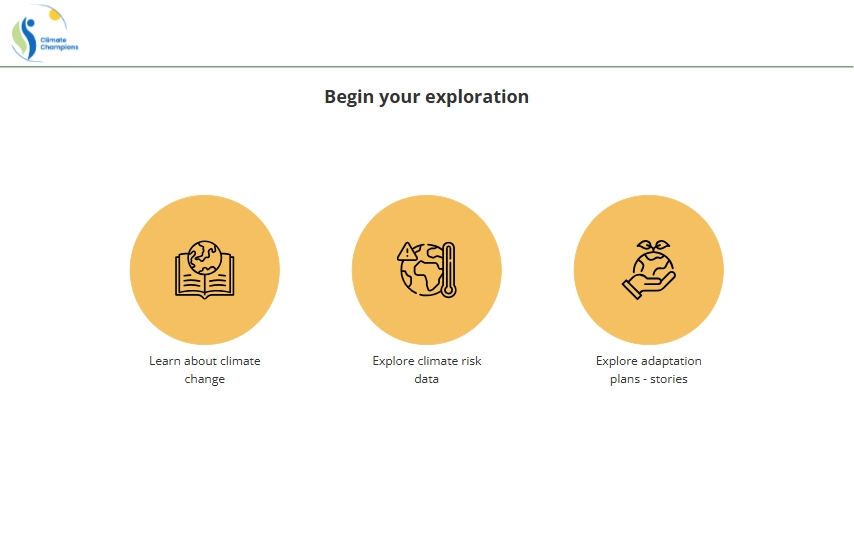
Our time testing the application with the local youth was invaluable. The goal was to discover where the tool performed well and which parts could use some improvements.
Key takeaways from the testing:
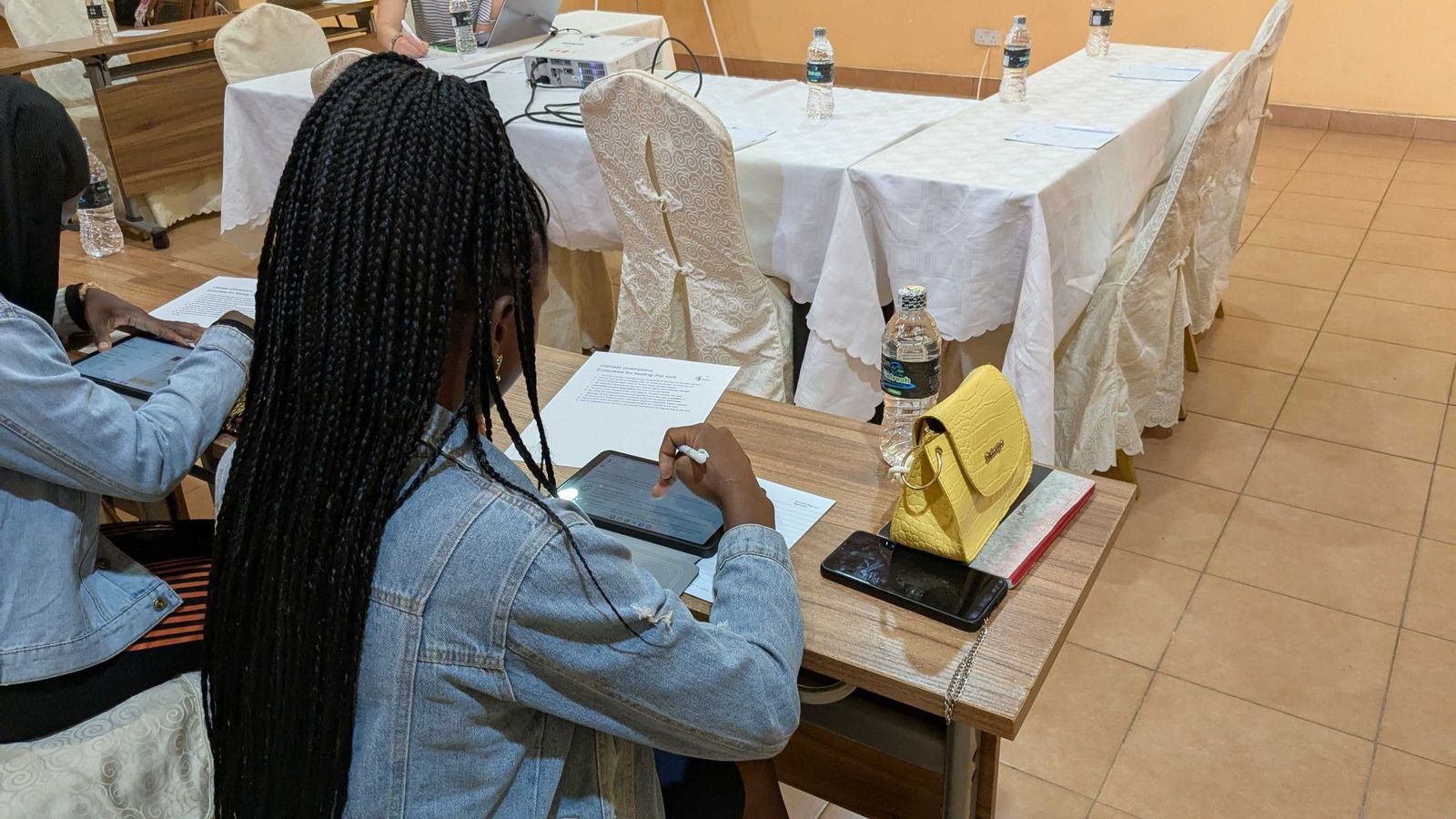
The feedback we gathered was the essential user perspective needed to transform the first version of the application into a truly useful and impactful education tool.
Showcasing the tool to an international audience in South Africa
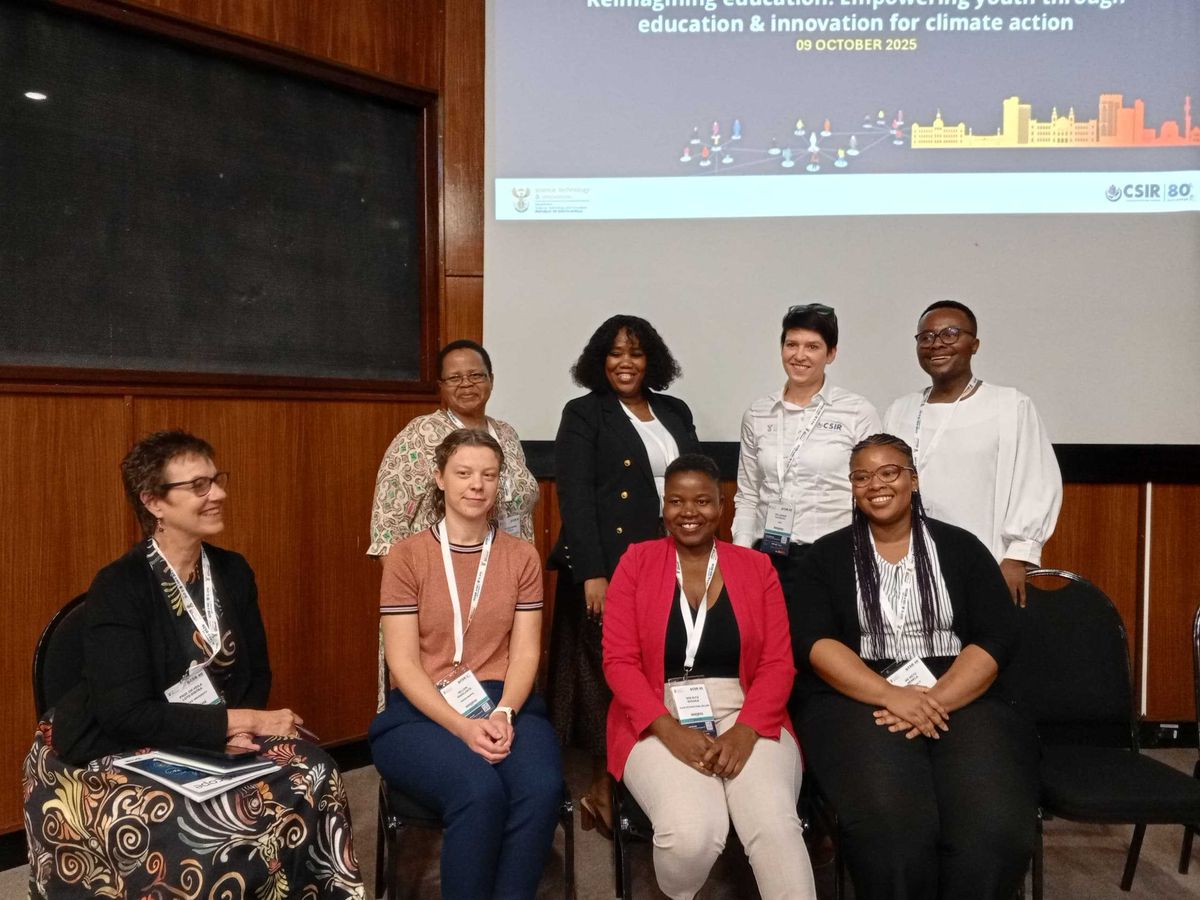
Armed with this critical, on-the-ground feedback from Malawi, our next stop was Pretoria to share our early results with the international G-STIC community. The topic of the Global Sustainable Technology & Innovation Community conference this year was: “Accelerating technological solutions for the SDGs.” It was an excellent opportunity to showcase our work and promote the project together with our partner from Plan International Malawi.
We were asked to participate in a deep-dive session about reimagining climate education. Plan International Malawi explained their Trainer-of-Trainers (ToT) approach to empower and educate the youth and their experience working with young people in climate action. We presented how we used a design thinking approach to develop the tool and the preliminary results of the testing on site.
Finally we had a dedicated Climate Champions booth, a nice opportunity to connect with different stakeholders beyond the sessions. We also got to know the other projects that are funded by the Flanders International Climate Action Programme (FICAP) and exchanged experiences.
What’s next for Climate Champions?
We spent quite some time on this journey to Malawi and Pretoria, but testing with your end users and putting your project out there in the world are invaluable steps that provide essential feedback for the next steps. We gathered real-world validation from the youth in Malawi, and interest from the international education sector at the G-STIC conference.
We now return with a clear roadmap for version two of the tool, informed by local expertise and supported by the international dialogue on climate education.
Stay tuned on the Climate Champions landing page as we translate these learnings into an even more user-friendly and impactful climate education tool.
Project financed by

Project managed by